Conferences & Declaration summary
Conferences & Declaration summary
2008
The 5th United Nations Day of Vesak
(Socialist Republic of Vietnam)
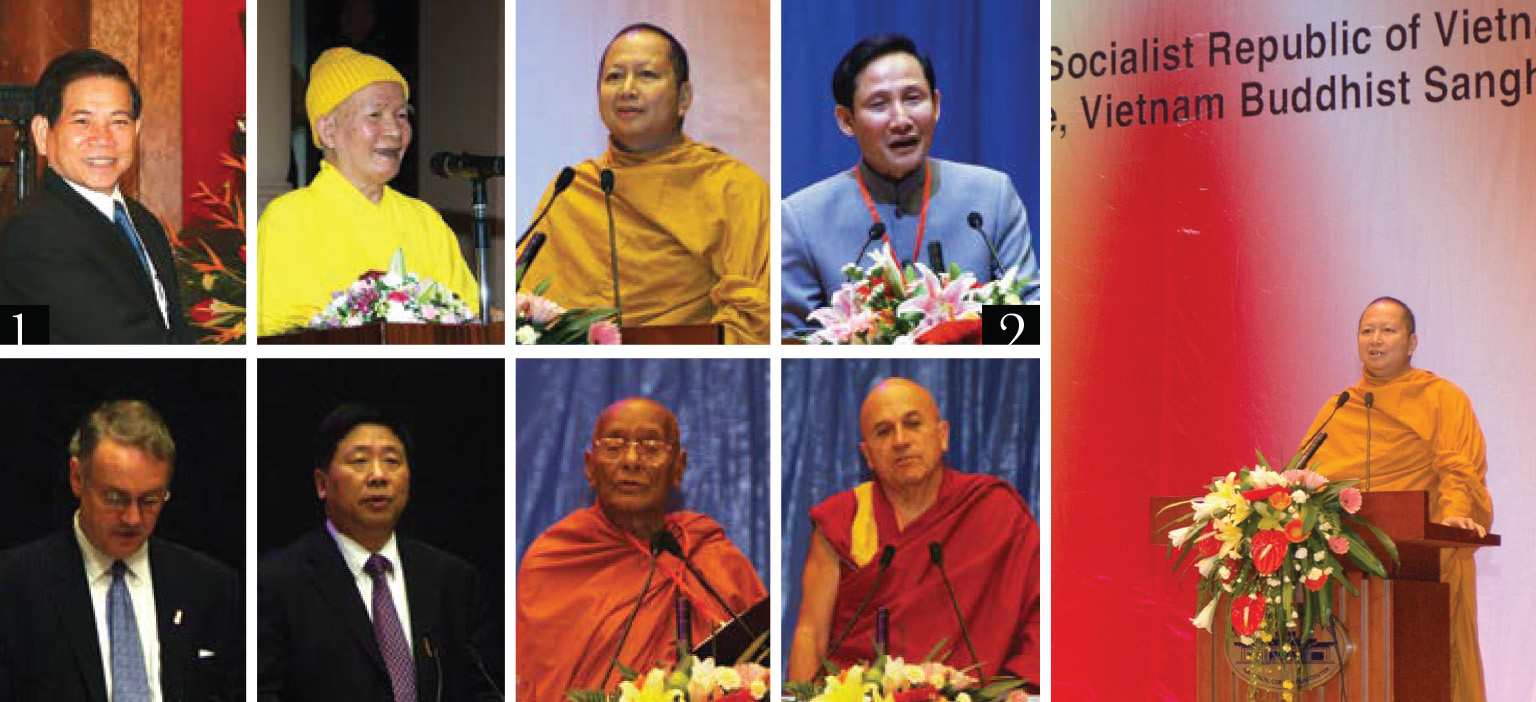 From May 14 to 17, 2008 (B.E. 2551), the 5th United Nations Day of Vesak celebration marked a significant milestone as it convened for the first time outside Thailand, hosted by the Socialist Republic of Vietnam at the National Convention Centre in Hanoi. This historic gathering drew an unprecedented level of international participation, with distinguished delegates representing seventy-four countries and regions. The celebration received substantial institutional support from the Government of the Socialist Republic of Vietnam and the Vietnam Buddhist Sangha, demonstrating the expanding global significance of this observance.
“Buddhist Contribution to Building a Just, Democratic and Civil Society” served as the central theme of the celebration, with the renowned Buddhist scholar and practitioner Venerable Mathieu Ricard delivering the illuminating keynote address. The intellectual discourse of the event was structured around seven comprehensive sub-themes, each exploring critical dimensions of Buddhism’s contemporary relevance:
- War, Conflict and Healing: A Buddhist Perspective
- Buddhist Contribution to Social Justice
- Engaged Buddhism and Development
- Care for Our Environment: Buddhist Response to Climate Change
- Family Problems and the Buddhist Response
- Symposium on Buddhist Education: Continuity and Progress
- Symposium on Buddhism in the Digital Age
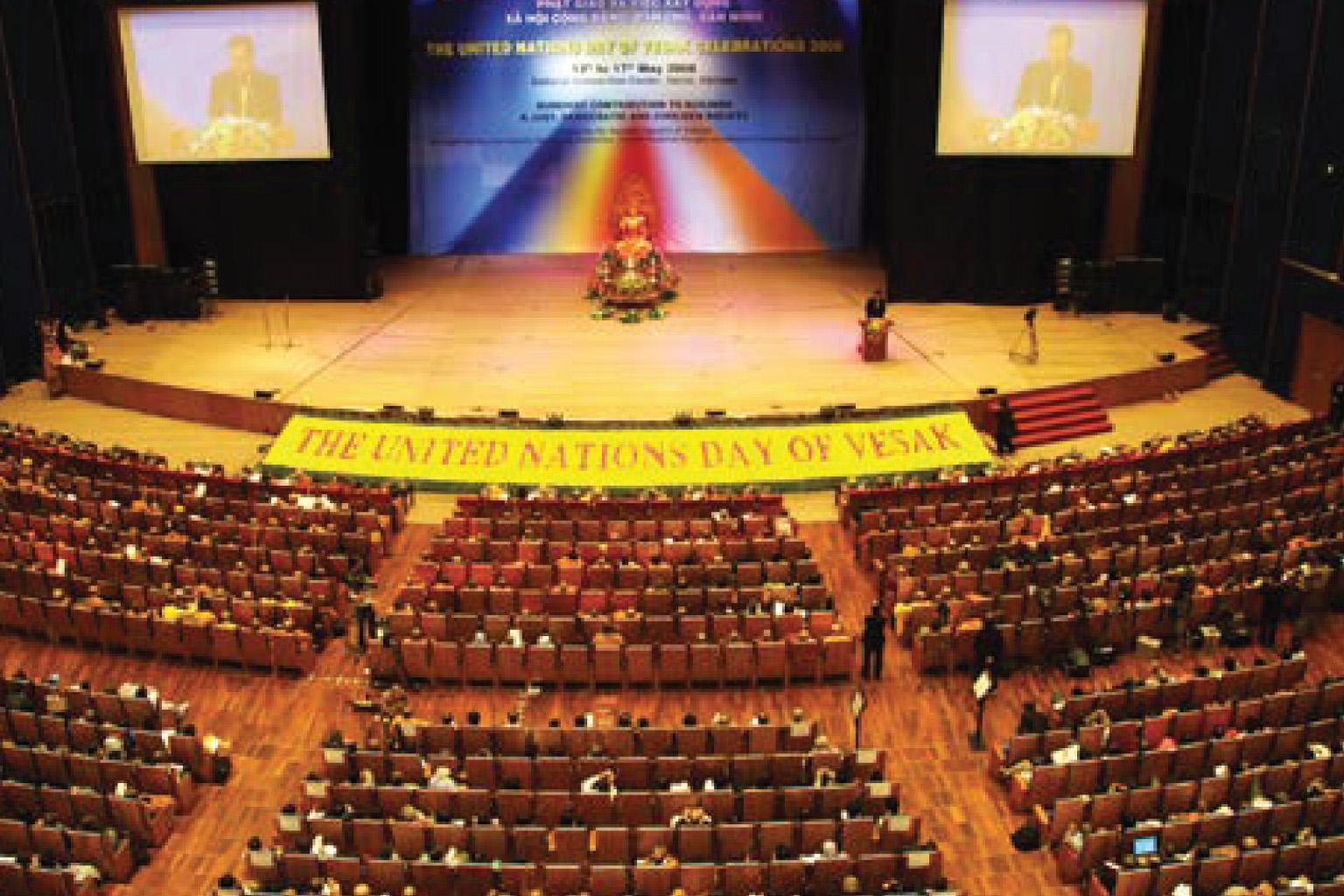 Following extensive deliberations across these diverse topics, the assembled dignitaries reached unanimous consensus on the Hanoi Declaration, which articulated the following key principles and commitments:
- To urge international communities to strengthen their efforts towards sustainable world peace in promoting dialogue, mutual trust, respect, and human dignity among different religions and nations, through the light of Buddhist wisdom and compassion.
- To promote prevention of conflict and war, especially by means of disarmament including prohibition of tests of nuclear weapons, production of chemical and bacteriological (biological) weapons and the prevention of the pollution of oceans and inland waters.
- To enhance economic, social, environmental and spiritual development throughout the world, in order to achieve a higher quality of life for all the people.
- To advocate for social justice, democracy and good governance in all sectors of society, in order to bring peace and security within and among nations.
- To acknowledge that social and economic development cannot be secured in a sustainable way in the absence of peace and respect for human rights and fundamental freedoms.
- To contribute towards legal and administrative measures for the protection and improvement of the environment, at both national and international levels, in order to commit to a healthy and productive life in harmony with the environment.
- To affirm that climate change and other forms of environmental damages are already harming human well-being and that urgent action is required to minimize these changes.
- To stress on pursuing active measures to halt the misuse of our natural resources, a modern-life trend which has resulted in ecological imbalances, which increase the threat of climate change and endanger all life on the planet.
- To recognise and respond to the moral and spiritual needs of individuals, families and the communities at large.
- To recognise the need for solutions to global social problems, especially poverty, unemployment and social injustice.
- To acknowledge the continuing need for modernisation of education for monastics and laypeople, to enable them to meet challenges of local and global issues and crisis.
- To provide basic education and improve the quality of education, especially for girls, women and deprived groups, in order to remove every obstacle that hampers their active participation in social life.
- To strengthen family bonds by emphasising the Buddhist principles of harmony, understanding and compassion for stable marriages and individual happiness.
- To stress on the growing importance of information technology and provide guidance for the wise use of technology to serve social interests.
- To develop materials for the internet that can be easily accessed by users to bridge the gap between those in developed regions and those in under-developed societies with limited resources.
- To support major international Buddhist events including the Second World Buddhist Forum in China in November 2008, the Fifth World Buddhist Summit in Japan in 2008, the First Conference of International Association of Buddhist Universities, Bangkok, Thailand, in September 2008, as well as the activities of the World Fellowship of Buddhists (WFB) and Inner Trip Reiyukai International (ITRI).